
Security operations often fail not from a lack of major technology systems, but from a gradual erosion of daily operational discipline. When a corporate facility, industrial site, or retail space experiences a breach, the root cause is frequently traced back to a seemingly minor oversight a faulty radio battery, an unrecorded door gap, or a blind spot in a CCTV feed that went unnoticed for days. For any corporate entity or property manager, these small lapses compound into significant vulnerabilities, leaving assets exposed and increasing legal liability.
We understand that maintaining an ironclad perimeter requires a shift from passive observation to active, systematic verification. Security personnel cannot simply show up and sit behind a desk; they must execute precise operational protocols from the moment their shift begins. Relying on memory or informal handovers creates dangerous gaps that sophisticated bad actors are quick to exploit.
To mitigate these risks effectively, industry compliant Manchester security company ensures that personnel are trained to execute rigorous operational workflows. By implementing structured daily validation protocols, operations reduce the window of vulnerability for unauthorized access to zero. This proactive methodology addresses technical degradation and physical breaches before they can impact commercial operations or compromise personnel safety.
Passing the Shift and Checking Team Radios
A successful security shift is built entirely on the quality of the information passed down from the previous team. A casual conversational briefing is insufficient for high risk corporate environments. A formal, documented handover must capture every ongoing incident, maintenance issue, and structural anomaly present on the property.
Our personnel begin every deployment with a comprehensive review of the Daily Activity Report (DAR) and the master incident log from the preceding 24 hours. This initial check focuses on identifying any temporary vulnerabilities, such as a broken window on the ground floor awaiting repair, a malfunctioning access control gate, or a specific zone where contractors are working after hours. Understanding these active variables prevents personnel from walking into a dynamic situation without adequate situational awareness.
Following the documentation review, an immediate diagnostic check of all primary and secondary communication equipment is mandatory. Personnel verify radio functionality across all assigned channels, testing for clarity, signal strength, and dead zones within the facility. Batteries must be checked to ensure they hold a charge above 85%, and backup power packs must be physically accounted for. When teams operate with failing communication links, response times during an active breach can increase by more than 400%, turning a containable situation into a catastrophic loss.
Access Control Integrity and Physical Perimeter Validation
The physical boundary of a facility is its primary line of defense. A single unlatched fire exit or a compromised perimeter fence panel nullifies even the most expensive interior biometric security systems. Physical perimeters require manual, hands on validation to ensure that structural integrity has not been subtly compromised by environmental wear or deliberate tampering.
Our physical verification protocol demands that personnel physically walk the entire perimeter line, paying specific attention to vulnerable areas such as foliage overgrowth, dark corners, and external utility points. Officers do not simply look at doors and gates; they physically test the locking mechanisms, electronic strikes, and magnetic locks to verify that they engage securely.
Any gap in a perimeter door greater than 5mm can allow an intruder to utilize bypassing tools, making immediate detection and reporting critical.
- Locking Mechanism Audits: Testing all mortice locks, padlocks, and panic bars for mechanical fluid movement and complete latch engagement.
- Fence Line Inspections: Searching for signs of cutting, digging, or structural sagging along the fence line, as well as checking that anti climb measures remain intact.
- Utility Infrastructure Checks: Verifying that external power sources, gas valves, and water mains are locked and completely free from signs of unauthorized interference.
- Key Control Inventories: Performing a strict physical count of all master keys, electronic fobs, and access cards against the asset register at the start of every shift.
Surveillance Optimization and Control Room Management
Modern CCTV systems are incredibly powerful, but their effectiveness is limited by the attention detail of the operator and the physical condition of the hardware. Environmental factors like dust accumulation, spider webs, heavy rain, and system software lag can quietly reduce a high definition surveillance network into a series of blurred, useless screens. Daily optimization ensures that the digital eyes of the facility remain sharp and responsive.
Personnel stationed in the control room or conducting system checks must systematically verify the status of every camera feed on the matrix. This process involves executing manual PTZ (Pan Tilt Zoom) commands to ensure mechanical gears are moving smoothly without sticking. Operators must actively check for lens fogging, physical misalignment caused by wind or vandalism, and the operational status of infrared illuminators for night time visibility.
Beyond the cameras themselves, the recording infrastructure requires continuous monitoring. Officers check that the NVR (Network Video Recorder) or DVR (Digital Video Recorder) is actively saving footage without dropping frames. They verify that timestamp data is perfectly synchronized with the network time protocol, as a discrepancy of even a few seconds can render video evidence inadmissible in a court of law. Hard drive storage capacity must also be audited to ensure that automated overwrite cycles are functioning correctly without erasing critical historical footage.
Life Safety Systems and Emergency Egress Compliance
While property protection is a core priority of any security operation, the absolute preservation of human life takes precedence over all else. Security officers bear the heavy responsibility of ensuring that fire safety infrastructure is operational and that emergency escape routes are completely unblocked. In an evacuation scenario, an obstructed fire exit or a silent alarm panel can lead to severe injuries and catastrophic legal consequences for a business.
Daily life safety checks must be thorough and uncompromising. Personnel inspect the main fire alarm control panel to confirm it is showing a “normal” status, free from any fault lights or isolated zone warnings. This includes looking for yellow trouble indicators that suggest a systemic wiring fault or a battery failure within the fire detection loop.
Egress paths must be walked daily to guarantee that stockroom overflow, delivery pallets, or maintenance equipment have not been left in designated escape corridors. Fire doors must be checked to ensure they close automatically and seal tightly against their frames, which prevents the spread of toxic smoke during an incident. Officers also verify that emergency exit signage is illuminated brightly, ensuring that occupants can safely find their way out of a dark, smoke filled environment.
Keeping the Site Safe and Protecting Your Assets
Industrial and commercial facilities face constant threats from environmental hazards, mechanical breakdowns, and utility failures that can cause millions of pounds in damage. A proactive security officer acts as an early warning system for these non human threats, detecting infrastructure anomalies long before automated building management sensors might trigger an alert.
During standard foot patrols, personnel remain highly attuned to sensory changes within the building environment. The faint smell of scorching insulation indicates an overloaded electrical distribution board. The sound of running water behind a drywall partition points to a pinhole pipe leak. The sudden drop in temperature in a server room suggests an air conditioning failure that could cook vital IT hardware within hours.
By documenting and reporting these micro anomalies immediately, security teams help prevent massive financial losses stemming from flooded stockrooms, destroyed data infrastructure, and extended business downtime. These daily checks shift the security department from a simple insurance requirement into a tangible asset that protects the daily operational continuity of the entire enterprise.
Operational Efficiency Through Rigorous Security Audits
Implementing these systematic daily checks delivers measurable operational benefits that extend far beyond simple crime prevention. When a business transitions from a reactive security posture to a highly disciplined, checklist driven protocol, the financial and operational gains are immediate and clear.
| Metric Area | Before Structured Daily Checks | After Structured Daily Checks | Operational Impact |
| Perimeter Security Gaps | High risk of unlatched doors or failed gates remaining unnoticed for days | Zero open vulnerabilities beyond a single patrol interval | Immediate reduction in opportunist theft and unauthorized entry |
| Equipment Lifespan | Radios and body cams run to failure, causing sudden operational blind spots | Predictive maintenance catches battery and hardware degradation early | 35% reduction in emergency equipment replacement costs |
| Incident Response Time | Delayed due to poor handover data or communication equipment failures | Immediate deployment via verified clear communication channels | Rapid containment of security breaches and localized emergencies |
| Insurance Compliance | Inconsistent logging leads to disputed claims and premium increases | Comprehensive digital trails verify proactive risk management | Protection against liability claims and potential premium discounts |
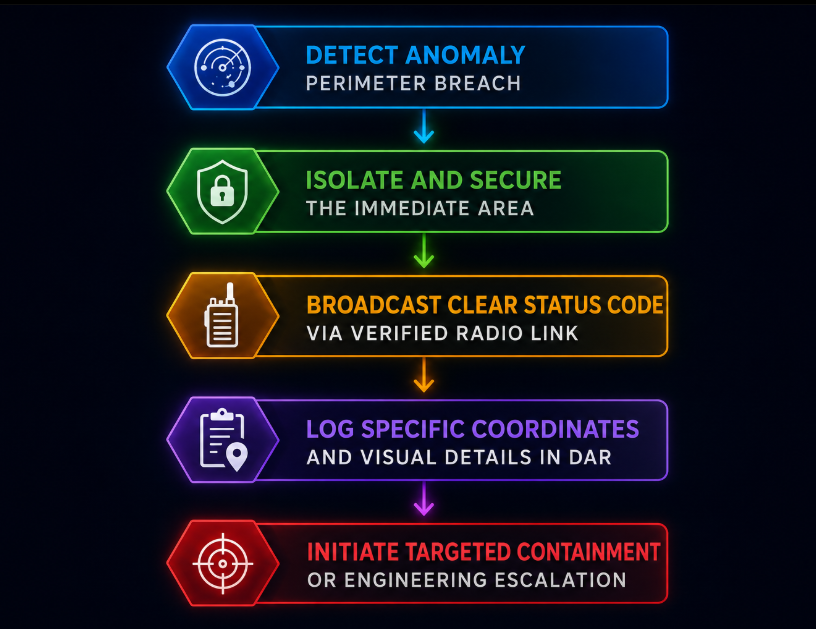
Standard Emergency Response Protocols
When an anomaly or breach is detected during a daily check, personnel follow a precise sequence of actions to contain the threat and minimize organizational impact.
Frequently Asked Questions
What happens if a security officer discovers a broken access control lock during a night shift?
The officer must immediately implement dynamic containment procedures. This involves securing the door manually if possible, assigning a static guard to the post if the asset risk is high, documenting the failure in the incident log, and raising an emergency maintenance ticket for immediate repair at first light.
How often should communication equipment be tested during a standard twelve hour deployment?
Primary diagnostics occur at the start of the shift. However, brief radio checks should be executed at the beginning of every patrol cycle or every three hours to ensure that changing weather conditions or structural interference have not created new communication blind spots.
Why is it necessary to physically touch perimeter gates if they look secure from a distance?
Visual inspections are inherently deceptive. Electromagnetic locks can appear engaged while failing to draw sufficient current to hold against force. Similarly, latch pins can sit misaligned inside the strike plate, allowing the door to be pushed open easily without a key card.
What is the role of a security officer regarding onsite fire extinguishers during daily patrols?
Officers perform visual verifications to ensure each extinguisher is mounted in its designated location, the safety pin remains intact, the tamper seal is unbroken, and the pressure gauge needle rests firmly within the green operational zone.
How do daily security checks protect a business from legal liability?
In the event of an incident, regulatory bodies look for proof of due diligence. A unbroken history of daily, signed security logs proves that the business took active, reasonable steps to maintain a safe environment and secure premises, significantly reducing exposure to claims of negligence.
Should security personnel monitor internal building temperatures during their sweeps?
Yes. Monitoring temperatures is vital in critical infrastructure areas such as server rooms, data centers, and chemical storage facilities. Sudden temperature spikes indicate climate control failures that can lead to hardware meltdowns or hazardous material instability.
What details must be recorded in the Daily Activity Report during a shift handover?
The handover must include exact key counts, radio battery statuses, a list of active maintenance faults, names of authorized late night visitors or contractors, specific security alerts issued by local authorities, and any incidents that occurred during the previous shift.
How do officers handle unexpected contractors arriving without prior authorization on the handover sheet?
Personnel must deny entry immediately and direct the contractors to a secure holding area. The officer then contacts the designated facility manager to verify credentials and obtain written approval before granting access to any part of the site.
What is the protocol if a CCTV camera feed goes black during a shift?
The operator must immediately check if the issue is a software glitch by restarting the monitor matrix. If the feed remains down, a mobile patrol officer is dispatched to visually inspect the physical camera unit for tampering, power failure, or environmental damage, while the control room logs the downtime.
How does foliage overgrowth impact perimeter security systems?
Overhanging branches and dense bushes create physical blind spots for CCTV cameras, provide hidden scaling leverage points along fence lines, and can trigger frequent false alarms on laser perimeter intrusion detection systems, desensitizing operators to genuine alerts.
Closing Thoughts
Robust security is never defined by the sophistication of a static alarm system, but by the daily discipline of the team operating it. When we systematically verify every physical lock, run diagnostics on communication links, and audit perimeter points, we transform security from a passive expense into an active prevention engine. This relentless attention to operational detail ensures that tiny technical or physical vulnerabilities are caught and neutralized before they can escalate into costly, disruptive breaches.
We build our deployment strategies on this exact foundation of micro vigilance. By integrating these strict, checklist driven validation protocols into our standard operating procedures, we protect physical assets, mitigate corporate liability, and ensure total regulatory compliance. True facility protection is not left to chance; it is engineered through the compounding power of flawless daily execution.