
Quick answer: Key holding is a service where a licensed security company keeps the keys to your premises securely and sends a trained officer when they are needed, most often when your intruder alarm activates. The officer checks the building, deals with the cause, resets or secures it where authorised and reports back, so your own staff do not have to attend at night.
Every business with an alarm needs someone who can respond when it goes off. For many owners and managers that means a phone call at 2am and a drive across town to an empty building, not knowing what is waiting there. Key holding hands that job to trained, licensed security officers.
This guide explains what key holding is, how alarm response works, the UK rules that apply, what affects the cost and how to choose a provider. It is written by Universal Support Services Group (USSG), an SIA Approved Contractor for security guarding and key holding, based in Stockport since 2016.
Most alarm activations turn out to be false alarms: a faulty sensor, a door not fully closed, a cleaner who forgot the code. The danger is the one that is not. Nobody should be walking into an unknown situation alone at night just because they happen to be on the keyholder list.
Ali Arain, Founder and Chief Executive Officer, USSG
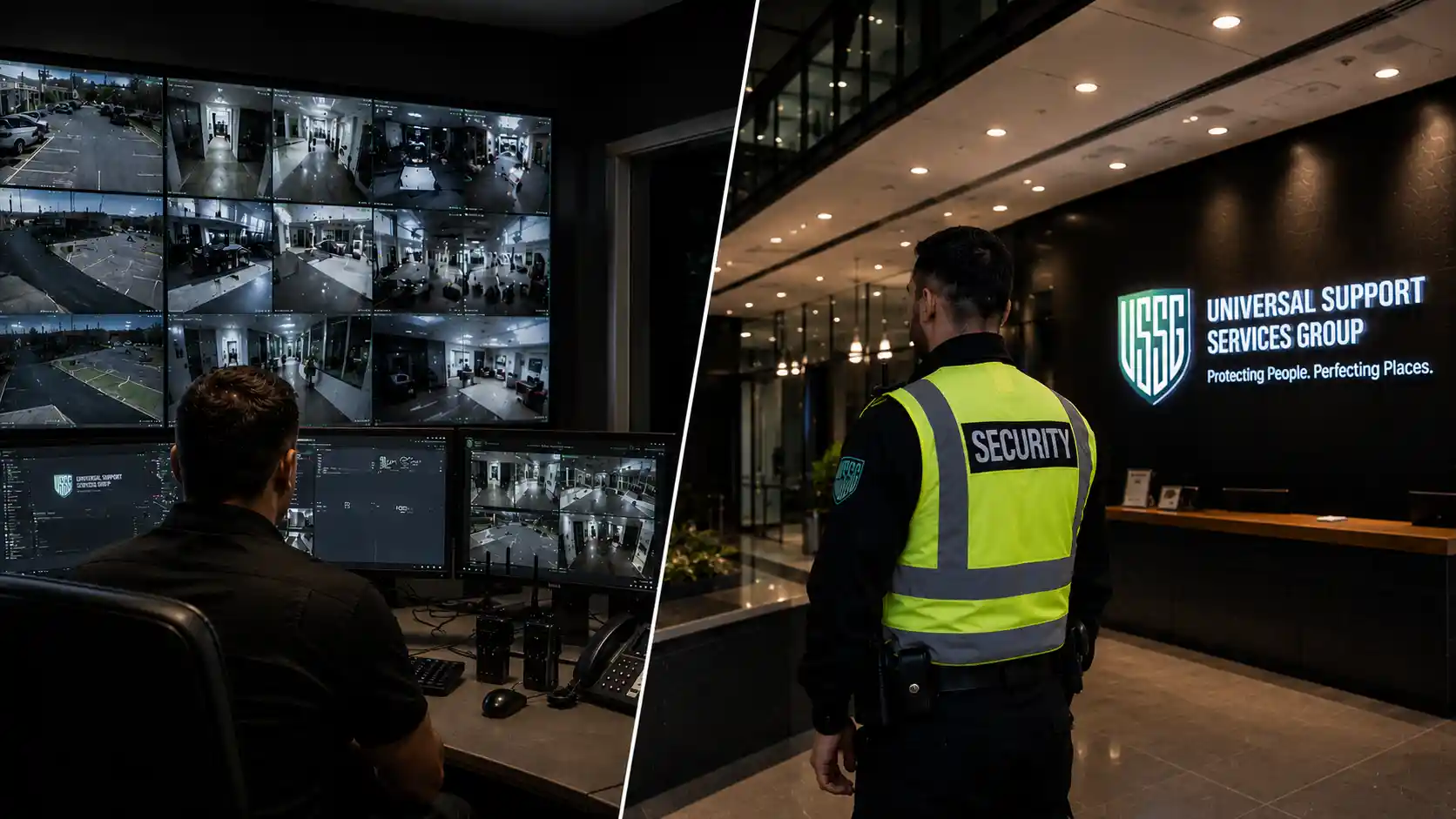
In this guide
- How key holding works
- What alarm response means
- Why businesses use a key holding company
- Keyholder requirements for monitored alarms
- UK licences and standards
- Key holding vs mobile patrols vs a guard
- What affects the cost
- How to choose a key holding company
- Frequently asked questions
How does key holding work?
- Agreement: you agree who may authorise access, which keys and codes are held, the contact list and what the officer may do on site.
- Key handover: keys are logged and tagged with a code rather than your address, so a lost key cannot be linked to your building.
- Secure storage: keys are kept in a locked, access-controlled store, and every issue and return is recorded.
- Notification: when the alarm activates, the alarm monitoring centre or your nominated contact calls the key holding company.
- Attendance: an officer travels to the site, checks the outside first, then the inside where it is safe and authorised.
- Action: the officer secures the premises, resets the alarm where authorised and calls the police or emergency services if needed.
- Report: you receive a record of the call-out: times, what was found and what was done.
What is alarm response?
Key holding and alarm response are usually sold together. Key holding is the safe custody of your keys. Alarm response is an officer attending when the alarm activates. Many contracts also include:
- Lock and unlock: opening or securing the premises at set times.
- Out-of-hours access: letting in contractors, engineers or emergency services.
- Emergency attendance: after a break-in, flood or fire, until the building is safe and secure.
- Temporary guarding: arranging an officer to stay if a door or window cannot be secured that night.

Why do businesses use a key holding company?
- Staff safety: nobody from your team has to attend an empty building alone at night.
- Availability: a key holding company can respond 24 hours a day, including holidays, when staff may be away.
- Trained response: officers know how to check a building safely, preserve evidence and deal with the police.
- Insurance and alarm requirements: insurers and alarm monitoring contracts often require named keyholders who can attend promptly.
- Records: every call-out is logged, which helps with insurance claims and spotting repeat false alarms.
If you are not sure what level of cover you need, read the 5 signs your business is under-protected.
Keyholder requirements for monitored alarms
If your alarm is monitored and can call the police, police policy and your alarm company will expect named keyholders who can reach the premises quickly, usually within about 20 minutes, and many alarm companies ask for at least two. If your keyholders cannot attend, police response can be withdrawn. A key holding company can act as one or all of your named keyholders, which makes this requirement much easier to meet. Check the exact terms with your alarm company.
UK licences and standards for key holding
- SIA licence: key holding is a licensable activity, so a company holding keys under contract needs the right SIA licence. If attending a call-out involves guarding the premises, the officer also needs a front-line licence such as Security Guard. See GOV.UK: find out if you need an SIA licence.
- BS 7984-1:2016: the British Standard code of practice for keyholding and response services, covering how keys are stored and how call-outs are managed and recorded.
- BS 7858: screening of officers who hold keys and enter client premises.
- SIA Approved Contractor Scheme: businesses can be approved for key holding as well as for security guarding. Check the scope a provider is approved for.
Key holding vs mobile patrols vs a static guard
| Service | When an officer is on site | Best for |
|---|---|---|
| Key holding and alarm response | Only when called, usually after an alarm | Premises that close at night or at weekends and have an alarm |
| Mobile patrols | Short visits at set or random times | Regular checks and lock-ups without a full-time guard |
| Static guarding | Continuously for agreed hours | Busy or high-risk sites that should never be left empty |
What affects the cost of key holding?
Key holding is usually charged as a regular fee for holding the keys, plus a charge for each call-out. The price depends on:
- how many sites and sets of keys are held
- how often call-outs are expected, and how long the officer stays on site
- the distance from the provider’s base to your premises
- extra duties such as lock and unlock, contractor access or temporary guarding
- out-of-hours, weekend and bank holiday call-outs
If an officer needs to stay on site after a break-in, that time is normally charged at the security guard rate. Our guide on how much a security guard costs sets out typical hourly rates.
How to choose a key holding company
- Is the company licensed for key holding by the SIA, and is it an SIA Approved Contractor?
- How are keys tagged, stored and logged, and who can access them?
- What attendance time is written into the contract?
- Will you receive a report after every call-out?
- Are officers screened to BS 7858 and employed directly?
- Where is the response team based, and how far is it from your site?
Ask to see how your keys would be stored and signed out before you hand them over. If a provider cannot show you a clear key log, it will not be able to show you one after something goes missing either.
Ali Arain, Founder and Chief Executive Officer, USSG
How USSG provides key holding and alarm response
USSG is an SIA Approved Contractor for security guarding and key holding. We agree the custody of keys, the notification route and the actions our officers may take before cover starts, and we report after every call-out. See our key holding and alarm response service.
For example, our Star Academies case study shows how we provide 24/7 alarm response for a multi-academy trust with schools across the UK, with a tailored plan for each school and regular reports for school leaders. We are based in Stockport and take enquiries across the UK, so contact the team to discuss your premises.
Frequently asked questions about key holding
What is a keyholder?
A keyholder is a person or company named on your alarm records who holds keys to the premises and can attend when the alarm activates. A key holding company can act as your keyholder so staff do not have to.
Does a key holding company need an SIA licence?
Yes. Key holding under contract is a licensable activity, and officers who guard premises during a call-out also need a front-line licence. Check that the provider is approved for key holding.
How quickly will an officer attend an alarm?
It depends on the distance from the provider and the time of day. The attendance time should be agreed and written into the contract before cover starts.
Are my keys safe with a key holding company?
They should be. Keys should be tagged with a code instead of your address, kept in a locked, access-controlled store, and every issue and return should be logged.
What happens if it is a false alarm?
The officer checks the premises, resets the alarm where authorised, secures the building and reports the likely cause, which helps you fix repeat false alarms.
Can key holding include locking and unlocking?
Yes. Many contracts include opening and locking the premises at set times, and letting in contractors or engineers out of hours.
Do I still need my own keyholders?
Not necessarily. A key holding company can be one or all of your named keyholders, but check what your alarm company and insurer require.