
Quick answer: Manned guarding means having trained security officers physically present at your premises to deter crime, control who comes in, patrol the site, and respond to and report incidents. In the UK, officers supplied under contract must hold a Security Industry Authority (SIA) licence. It is also called static guarding or security guarding.
Most businesses first look into manned guarding after something has already gone wrong: a break-in over a bank holiday, stock going missing from a loading bay, or a member of staff left to deal with an aggressive visitor alone. This guide explains, in plain English, what manned guarding is, what an officer actually does on a shift, the UK rules that apply, what affects the cost, and how to tell a good provider from a weak one.
It is written by the team at Universal Support Services Group (USSG), an SIA Approved Contractor that has provided manned guarding services from our Stockport head office since 2016.
In this guide
- What manned guarding means
- What a manned guard does on a shift
- Types of manned guarding
- Manned guarding vs mobile patrols, key holding and CCTV
- UK licences and standards
- When a business needs manned guarding
- What affects the cost
- How to choose a manned guarding company
- Frequently asked questions
What does manned guarding mean?
Manned guarding is a security service in which one or more officers are stationed at a site for agreed hours. Unlike cameras or alarms, the officer can see a problem developing, speak to people, make a decision and act on it there and then.
In UK law the term comes from the Private Security Industry Act 2001. It describes manned guarding as guarding premises against unauthorised access, disorder or damage; guarding property against damage or theft; and guarding people against assault or injury caused by the unlawful conduct of others. Those activities are what an SIA licence covers.
You will see several names for the same service. Static guarding stresses that the officer stays on one site for the whole shift. Security guarding is the name of the SIA licence. Manned guarding is the industry term that covers all of these on-site roles.
What does a manned guard do on a shift?
Every site has its own assignment instructions, which set out exactly what the officer must do. Typical duties include:
- Access control: checking staff, visitors, contractors and deliveries against an agreed entry procedure, and refusing entry where needed.
- Patrols: walking set routes inside and around the premises, checking doors, windows, fences, fire exits and alarm panels.
- Opening and locking up: unlocking and securing the building at agreed times.
- Monitoring: watching CCTV screens or alarm systems where the site has them.
- Responding to incidents: dealing with intruders, disputes, alarms, medical emergencies and evacuations, and calling the emergency services when required.
- Reporting: recording every event in a daily occurrence book and writing incident reports that help you spot patterns.
- Customer service: greeting visitors, giving directions and acting as a calm, visible point of contact.
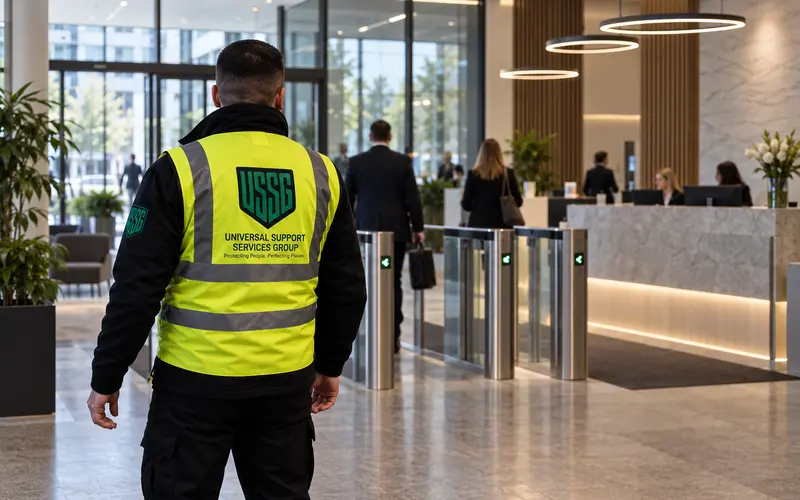
For a closer look at the routine behind a good shift, see the daily checks every security officer should perform.
Types of manned guarding
Manned guarding is not one fixed service. The duties, hours and type of officer change with the site.
Static site guarding
An officer, or a team working shifts, stays at one location to protect the building, people and assets. This is the most common form and suits offices, industrial units, depots and sites that are empty overnight. See our security guarding service.
Reception and concierge security
Front-of-house officers manage visitor sign-in, passes and lifts while keeping staff areas controlled. Read more about office security.
Gatehouse, warehouse and logistics security
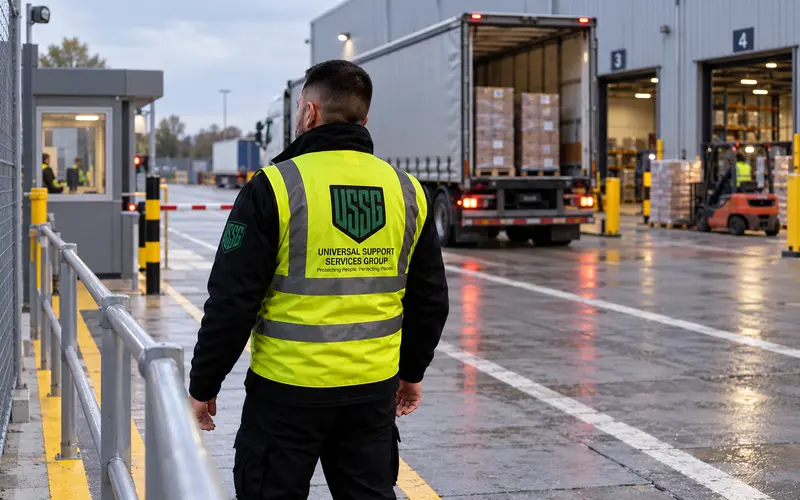
Officers check vehicles, drivers and loads in and out, and protect yards and loading bays, where most stock losses happen. See warehouse security.
Retail security
A visible, approachable officer deters shoplifting, supports staff and records incidents for the store manager. See retail security guards.
Construction site security
Officers control gates, check inductions and protect plant and materials, especially at night and over weekends. See construction site security.
Event security and door supervision
Events and licensed premises often need door supervisors, who hold a different SIA licence from security guards. If alcohol is sold or the venue holds a premises licence, check which licence the role needs. See event security services.
Manned guarding vs mobile patrols, key holding and CCTV
Manned guarding is the most hands-on option, but it is not always the right one. Many sites use a mix.
| Option | How it works | Best for | On-site presence |
|---|---|---|---|
| Manned guarding | An officer is on site for agreed hours | Busy sites, high-value stock, visitor control, sites that must never be left empty | Continuous |
| Mobile patrols | An officer visits at set or random times to check and lock up | Lower-risk sites, closed premises, several small sites | Short visits |
| Key holding and alarm response | A provider holds your keys and attends when the alarm goes off | Premises that close overnight or at weekends | Only when called |
| CCTV and remote monitoring | Cameras record, and may be watched remotely | Evidence, deterrence, large open areas | No physical presence |
Cameras record a crime, but they cannot step in to stop it. That is why CCTV alone is often not enough for sites with high-value assets or regular visitors.
UK licences and standards for manned guarding
SIA licence
Security officers supplied under contract must hold an SIA licence for the work they do, and they must wear it while working. Officers who are employed directly by the business whose premises they guard (in-house staff) generally do not need a security guarding licence, although door supervisors at licensed premises always do. The Government has consulted on extending licensing to in-house security staff, so check GOV.UK: find out if you need an SIA licence for the latest position.
To get a front-line licence, an applicant must:
- be 18 or over
- pass identity and criminal record checks
- hold a licence-linked qualification. For security guarding this is the Level 2 Award for Security Officers in the Private Security Industry, together with an Emergency First Aid at Work award
- renew the licence every three years
Source: GOV.UK: apply for an SIA licence.
BS 7858 screening
BS 7858:2019 is the British Standard for screening people who work in a secure environment. It covers identity, employment history and criminal record checks before an officer is deployed. A professional provider should be able to show you how it applies this standard.
BS 7499 code of practice
BS 7499:2020 is the code of practice for providing static guarding services. It covers how a provider plans, manages, supervises and reports on a guarding contract.
SIA Approved Contractor Scheme
Security businesses can apply to the SIA Approved Contractor Scheme, which assesses them against a set of quality standards. Approved contractors appear on the SIA public register, so you can check a provider’s status before you sign. See our memberships and accreditations.
When does a business need manned guarding?
Manned guarding is usually worth considering when:
- you hold high-value stock, equipment or materials
- many people, visitors or vehicles come and go each day
- staff face aggression, theft or anti-social behaviour
- the site is empty overnight or at weekends and has been targeted before
- your insurer, landlord or client contract requires security cover
- you are opening, relocating, refurbishing or winding down a site
If you are unsure, our guide on what determines the right level of security and the 5 signs your business is under-protected can help you decide.
What affects the cost of manned guarding?
Manned guarding is priced per officer per hour. The main things that change the rate are:
- Hours and shift pattern: nights, weekends and bank holidays cost more than weekday daytime cover.
- Pay floor: officers must be paid at least the National Living Wage, which is £12.71 an hour for workers aged 21 and over from April 2026 (GOV.UK). A rate that barely covers this leaves little for training, supervision or holiday cover.
- Type of officer: door supervisors, CCTV operators and dog handlers need different licences and skills.
- Site risk and duties: lone working, high-value stock or complex access control need more experienced officers.
- Contract length and volume: regular, longer contracts are usually cheaper per hour than one-off shifts.
As a guide, daytime manned guarding typically costs:
| Region | Typical hourly rate |
|---|---|
| Rural areas and small towns | £18 |
| Provincial towns and smaller cities | £18 to £20 |
| Major cities (Manchester, Birmingham, Glasgow) | £18 to £25 |
The exact rate is confirmed in a written quote after a site assessment. For a fuller breakdown, see our guide on how much a security guard costs.
How to choose a manned guarding company
Price matters, but the cheapest quote often hides weak vetting, no supervision or agency staff who have never seen your site. Before you sign, ask:
- Is the company an SIA Approved Contractor, and can you check it on the SIA register?
- Are officers screened to BS 7858 and employed directly, or supplied through another agency?
- Who supervises the officers, and how often are they visited on site?
- How will incidents be reported to you, and how quickly?
- What happens if an officer is ill or does not turn up?
- What insurance does the company hold?
Our full checklist explains how to choose a security company in the UK, and what separates a professional security company from an average one.
How USSG provides manned guarding
USSG is an SIA Approved Contractor for security guarding and key holding, certified to ISO 9001:2015 and ISO 14001:2015. Our officers are directly employed and screened to BS 7858 before deployment. Every assignment starts with a site assessment and written assignment instructions, and cover, hours and reporting are agreed with you before the first shift.
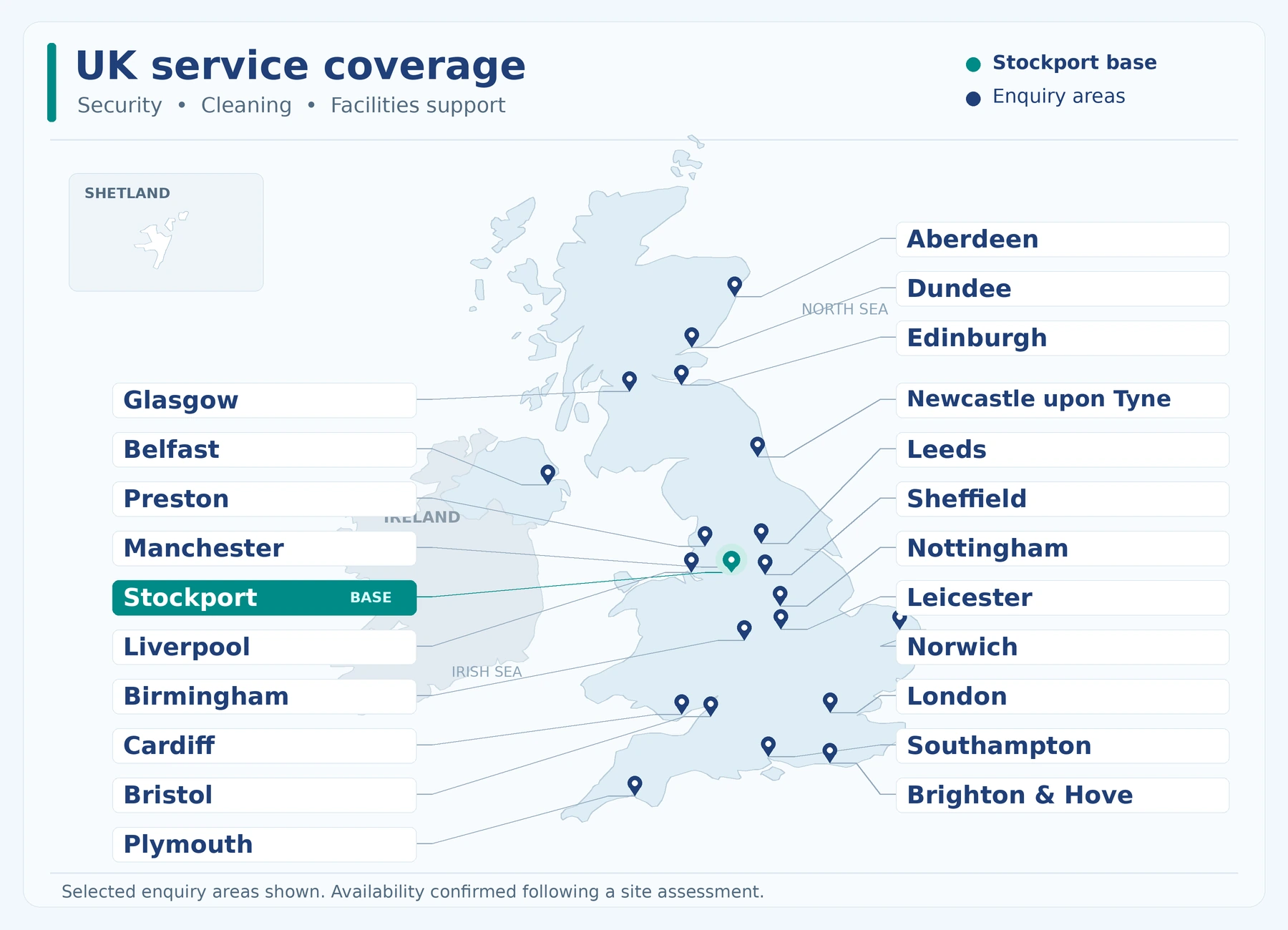
We manage work from our head office in Stockport, Greater Manchester, and take enquiries for sites across the UK. For example, see how manned guarding and loss prevention patrols brought a marked fall in theft at Costco Wholesale warehouses.
To discuss cover for your site, see our manned guarding services or contact the team.
Frequently asked questions about manned guarding
Is manned guarding the same as static guarding?
Yes, in everyday use they mean the same service. Static guarding stresses that the officer stays on one site for the whole shift. Manned guarding is the wider industry term, and security guarding is the name of the SIA licence.
Do manned guards need an SIA licence?
Officers supplied under contract must hold an SIA licence for the work they do. In-house staff employed directly by the business they guard generally do not need a security guarding licence, but door supervisors at licensed premises always do. Check GOV.UK for the latest rules.
What is the difference between a security guard and a door supervisor?
Both are licensed by the SIA, but they hold different licences. Security guards protect premises, property and people at sites such as offices, warehouses and shops. Door supervisors work at licensed premises and events, where they manage entry, searches and behaviour.
Is manned guarding better than CCTV?
They do different jobs. CCTV records and can deter, but it cannot intervene. A manned guard can challenge people, stop an incident and help in an emergency. Many sites use both, with the officer watching the cameras.
How much does manned guarding cost per hour?
Typically £18 an hour in rural areas and small towns, £18 to £20 in provincial towns and smaller cities, and £18 to £25 in major cities such as Manchester, Birmingham and Glasgow. London, nights, weekends and bank holidays cost more. The exact rate depends on the hours, type of officer and site risk.
How quickly can manned guarding start?
After a site assessment, cover can often start within days. Urgent requests depend on the location and the officers available, so share your postcode, hours and duties as early as possible.
Can manned guarding include key holding and alarm response?
Yes. Many sites combine an officer during working hours with key holding and alarm response overnight, so someone authorised can attend if the alarm activates.